When I was 28 years old, I fired my boss and took over the General Management of a multi-million-dollar global logistics company. Nobody told me that was not normal or that my instincts should have been picking up something fishy. Needless to say, the context of my life before and after this event was stressful.
Over my corporate career—running global trade for Fortune 100 and 500 companies—I continued to face the kind of stress that comes with million-dollar shipments, advocating for human rights, and debating the ethical implications of sourcing and logistics decisions. In short, stress was a constant, and I needed real relief.
It came in the form of something I was already doing every day: breathing.
On my commute to work, I started listening to a book on meditation, “Stress less, Accomplish more”. It was the first time I truly began to recognize how powerful the connection between mind, body, and breath really is. As I fine-tuned that connection through meditation, I noticed a higher level of emotional resiliency. With stress pushed to the sidelines, I could focus and make better decisions. To my chiropractor’s disappointment, I needed fewer visits because my back was looser, and my migraines had almost completely disappeared.
I’ll admit, meditation is like a muscle—you must build it—and the place to start is with your breath.
Here’s the thing: meditation isn’t always easy. Sitting still in silence can feel intimidating, even scary, for many people. I know from experience that you must be ready for it. But I still had another powerful tool.
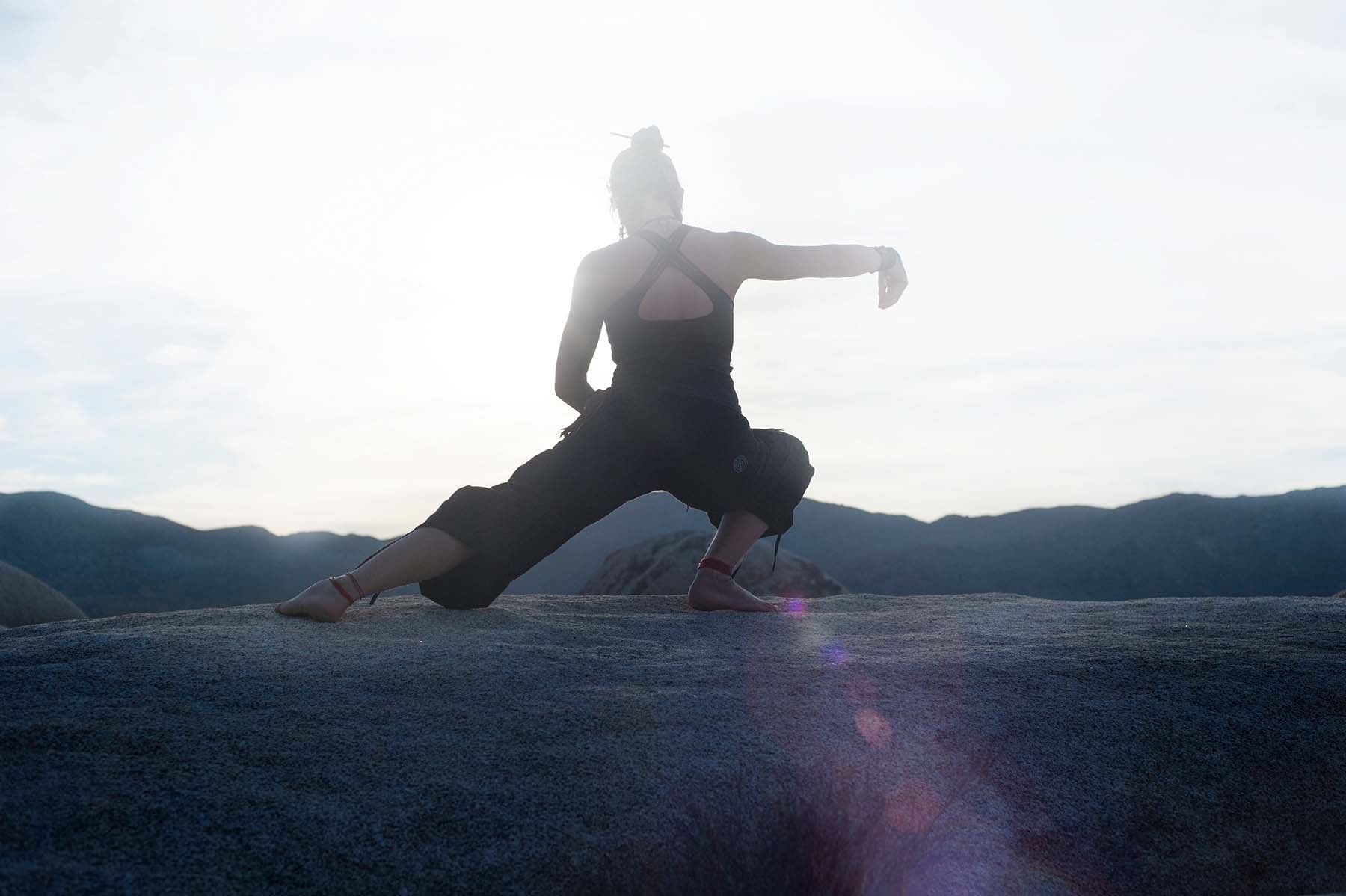
Qigong is an ancient Chinese practice of movement, breathwork, and intention. Think of it as a moving meditation. My favorite beginner practice is the Golden Ball. I integrate it into every introductory class I teach, and I often close my workshops and advanced classes with it. It’s literally an oldie and a goldie.
There are countless ways to meditate—guided, non-guided, silent, paired with music, sitting, standing, or moving. Personally, I’ve often found myself in a meditative state while gardening, doing art projects, or pausing at the summit of a difficult climb.
As a tool for building a foundation to relieve stress, meditation in its many forms—especially Qigong—is something I cannot recommend enough. Start simple: set aside 30–60 seconds once a day to take a few deep breaths. Over time, you’ll find the practices that resonate most with you.
Science continues to back what practitioners have known for centuries. A few of the benefits include:
- Lower stress hormones like cortisol
- Looser muscles and less tension in the body
- A steadier, calmer emotional state
Here are a few micro-shifts you can try to start building emotional resiliency and reduce stress today:
- Start with your breath. Even one minute of focused breathing can make a difference.
- Try the Golden Ball. A short, simple Qigong practice that works for all levels.
- Experiment with styles. Guided meditations, nature sounds, or moving meditation—see what feels right for you.
I wish you luck and offer a gentle invitation to make changes you can sustain for a lifetime. When you keep the shifts small and realistic, you can begin to enjoy them—and that’s what leads to true transformation.
Here are a few resources I’ve enjoyed on my own journey:
Wishing you a wealth of health in your journey.
—Kat